“Planck and Einstein had a special personal and professional
relationship. Despite Planck’s political and ideological differences with the
unconventional physicist, he respected Einstein’s scientific talents so much
that he arranged to bring him to Berlin before World War I. The package of
appointments and benefits which successfully wooed Einstein included election
as a full member of the PAW. The differences between the two physicists were
exacerbated during World War I and the Weimar Republic, when Einstein’s
pacifism and subsequent support of the republic also made him the target of the
far right in German politics.
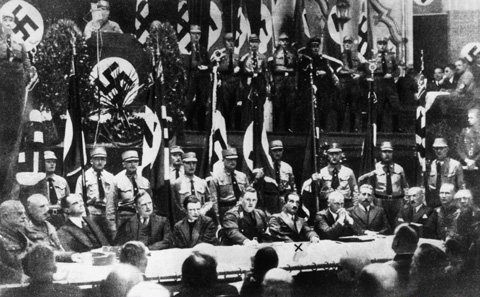
Einstein was in the United States when the
National Socialists came to power and immediately became a symbol for the
Jewish “internationalist” influence which Hitler’s movement was determined to
eradicate. The political right, of which National Socialism was at first only a
part, labeled anyone or anything internationalist which did not place the
German nation first. Of course, Jews were by definition excluded from this
nation. The reports of officially sanctioned anti-Semitism and the purge of the
universities reached Einstein and appalled him. This led to his announcement
that he would not return to Germany, which no longer enjoyed civil liberty,
tolerance, and equality of citizens before the law."